

The Individual Taxpayer Identification Number (ITIN) was created by the IRS in 1996 to allow people who cannot obtain Social Security Numbers to file federal tax returns and comply with US tax laws. This nine-digit number enables non-resident aliens, their spouses, and dependents to meet tax obligations, claim refunds, and contribute billions annually to the US tax system.
| Fact | Detail |
|---|---|
| Year Established | 1996 by the Internal Revenue Service |
| Primary Purpose | Enable tax filing for non-SSN holders |
| Annual Filers | 2+ million individuals |
| Tax Contributions | $13+ billion annually |
| Major Policy Change | 2017 dependent eligibility updates |
| Current Format | 9XX-XX-XXXX (starts with 9) |
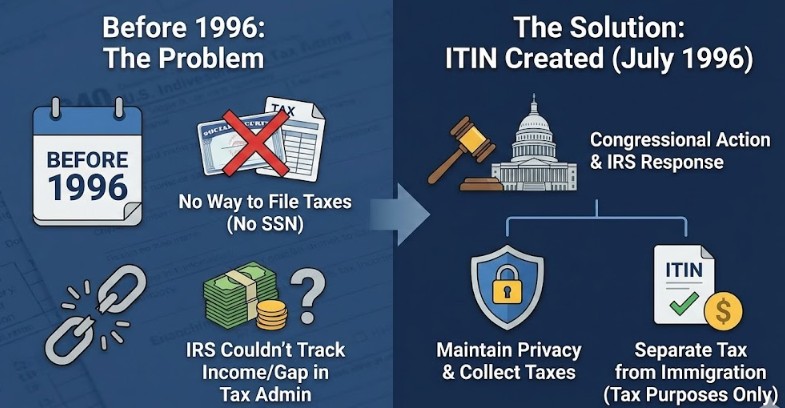
Before ITINs existed, millions of people living or earning income in America had no way to file taxes. These individuals could not get Social Security Numbers because they lacked work authorization or US citizenship status. Tax compliance became impossible for foreign nationals who needed to report US income on federal returns.
The IRS could not track tax payments from people without valid identification numbers in its systems. Landlords collecting rent, investors earning dividends, and business owners with US operations faced barriers to proper reporting. This created a gap in tax administration that affected both taxpayers and government revenue collection efforts.
Congress recognized that tax compliance should not depend on immigration status for people with US income. The IRS needed a system that separated tax administration from immigration enforcement to encourage proper reporting. Creating a separate identification number allowed the agency to collect taxes while maintaining privacy for filers.
The Treasury Department worked with immigration officials to design a number that would not grant benefits or work authorization. This careful design ensured ITINs would serve only tax purposes without creating immigration complications for holders. The system launched in July 1996 with specific application rules and document requirements for all applicants.
The ITIN program aimed to bring millions of people into tax compliance who previously operated in cash economies. Foreign investors, property owners, and business partners could finally report their US income properly through official channels. The IRS could then track these payments and ensure accurate reporting across all income types.
Many people who owed no taxes but had withholding could now claim their rightful refunds legally. Employers who withheld taxes from workers without SSNs could properly report these amounts to the IRS. This closed loopholes and created accountability in tax reporting for a previously undocumented population segment.
Families with mixed immigration status needed a way to claim all eligible members on tax returns. US citizens married to non-residents could file joint returns and claim better tax rates with ITINs. Parents could include their children as dependents regardless of where those children lived or their citizenship.
The program recognized that family tax benefits should be available when proper identification exists for all people. Dependency exemptions and child-related credits required valid taxpayer numbers for everyone listed on returns in any capacity. ITINs filled this gap and allowed families to access tax benefits they qualified for under the law.
Foreign nationals who own US rental properties must report rental income annually on tax returns. Non-resident aliens receiving investment income from US sources need ITINs to properly report dividends and interest. International students sometimes need ITINs for scholarship income or to claim tax treaty benefits available to them.
Spouses and dependents of US taxpayers require ITINs when claimed on joint or individual tax returns. Foreign business partners in US partnerships need ITINs to receive Schedule K-1 forms and report income. Anyone with a US tax filing requirement who cannot get an SSN must apply for ITINs.
Do you have a federal tax filing requirement?
├─ YES → Can you legally obtain a Social Security Number?
│ ├─ YES → Apply for SSN (not eligible for ITIN)
│ └─ NO → Eligible for ITIN
│ └─ Apply with Form W-7 + tax return
└─ NO → Are you a dependent or spouse on someone's return?
├─ YES → Eligible for ITIN
│ └─ Exception category applies
└─ NO → Not currently eligible for ITIN
Social Security Numbers authorize legal employment anywhere in the United States for the holder's lifetime. ITINs explicitly do not grant work authorization under any circumstances or in any job category. Employers cannot legally hire anyone using an ITIN instead of a valid Social Security Number.
The IRS clearly states on every ITIN letter that the number serves only for tax purposes. Immigration authorities do not receive information about ITIN holders from the IRS under federal law. This separation ensures people comply with tax obligations without fear of immigration consequences from filing.
SSN holders earn credits toward Social Security retirement and disability benefits through their work history. ITIN holders cannot earn these credits or qualify for Social Security benefits, regardless of contributions made. Medicare eligibility also requires an SSN and authorized work history that ITINs cannot provide.
Government assistance programs like unemployment insurance require SSNs to verify eligibility and calculate benefit amounts. ITINs do not qualify holders for federal benefits, state assistance, or any entitlement programs available. The number exists solely for tax administration and reporting purposes within the IRS system.

The first ITINs issued in 1996 had no expiration date and remained valid indefinitely for holders. Application requirements focused on proving identity and foreign status with limited document verification standards at first. The program grew rapidly as word spread about tax filing options for previously excluded populations.
Processing times improved as the IRS refined procedures and hired dedicated staff for ITIN applications. By the early 2000s, millions of people had obtained ITINs and filed tax returns annually. The program succeeded in bringing previously unreported income into the tax system for government tracking.
Congress and the IRS implemented new rules requiring dependent ITINs to be used regularly or expire. All ITINs issued before 2013 were scheduled for expiration on rolling schedules based on the middle digits. These changes aimed to reduce fraud and ensure holder information stayed current in IRS databases.
Documentation requirements became stricter with more emphasis on original documents or certified copies from issuing agencies.
The IRS created the Certified Acceptance Agent program to help applicants protect original passports during the process. These reforms improved program integrity while maintaining access for legitimate filers needing ITINs.
New rules in 2017 required dependents claimed for child tax credits to have ITINs or SSNs. Previously, some dependents could be claimed without these numbers under certain circumstances that changed with legislation. This update affected millions of families who needed to get ITINs for their children quickly.
The policy change aimed to reduce improper payments and ensure all claimed dependents had valid identification. Many families rushed to get ITINs for children before tax deadlines to maintain their credit eligibility. Learn more about current ITIN requirements and dependent documentation needs for your family situation.
The IRS receives over 2 million ITIN applications annually from people worldwide needing tax identification numbers. Peak season volumes occur from January through April when most people file their annual income tax returns. Processing backlogs during these months can extend wait times to 11 weeks or longer for applicants.
Certified Acceptance Agents now handle a significant portion of applications by verifying documents before IRS submission. The CAA network has grown to hundreds of authorized agents in the US and internationally. This expansion helps protect applicants' original documents while maintaining program integrity through verified submissions.
ITIN holders contribute more than $13 billion annually in federal income taxes through their filings. These payments fund government operations, infrastructure, and services that benefit all Americans regardless of immigration status. Social Security and Medicare taxes paid by ITIN holders total billions more each year.
Many ITIN holders pay into systems they will never benefit from due to ineligibility restrictions. This creates a net positive contribution to government coffers from a population often overlooked in policy discussions. The economic impact demonstrates the program's success in bringing informal income into formal tax reporting channels.
Why was ITIN created?
The ITIN was created in 1996 to allow people without Social Security Numbers to comply with federal tax laws. The IRS needed a way to process tax returns from foreign nationals with US income who could not get SSNs.
What is the purpose of an ITIN?
The purpose is to enable tax filing and compliance for people ineligible for Social Security Numbers. ITINs help the IRS track tax payments, process refunds, and ensure accurate income reporting from all sources.
What was the original purpose of the income tax?
Federal income tax began in 1913 with the 16th Amendment to fund government operations and services. The tax system has evolved over decades to include various credits, deductions, and reporting requirements.
Why ITIN instead of SSN?
ITINs exist for people who cannot legally obtain Social Security Numbers due to citizenship or immigration status. Anyone eligible for an SSN must use that instead of applying for an ITIN.
Can I open a bank account with an ITIN?
Yes, most banks and credit unions accept ITINs for opening checking and savings accounts under federal regulations. Some financial institutions may have additional requirements for ITIN holders when opening accounts.
What would happen if we abolished income tax?
This is a political and economic question beyond the scope of ITIN information and tax administration. The federal government relies on income tax revenue to fund operations, programs, and services nationwide.
Can I have an ITIN without an SSN?
Yes, ITINs are specifically designed for people who cannot get Social Security Numbers but have tax obligations. You must demonstrate SSN ineligibility when applying for an ITIN through Form W-7 submission.
How long is an ITIN good for?
ITINs expire after three consecutive years without being used on a federal tax return filed. Expired ITINs must be renewed using the same application process as new ITIN requests.
How many ITINs have been issued?
The IRS has issued over 20 million ITINs since the program began in 1996. Not all remain active, as many have expired or been replaced with Social Security Numbers.
Can I have both an ITIN and an SSN?
No, you cannot have both numbers active simultaneously for the same person under IRS rules. Once you receive an SSN, your ITIN becomes invalid, and you must use only the SSN.
When did we start having to pay income tax?
Federal income tax collection began in 1913 after ratification of the 16th Constitutional Amendment authorizing it. Tax rates, brackets, and rules have changed many times since then through Congressional legislation.
Can you refuse to pay federal taxes?
No, paying federal income tax is a legal obligation for people with filing requirements under US law. Refusing to pay can result in penalties, interest charges, and criminal prosecution for tax evasion.
Understanding ITIN history helps explain why this program matters for millions of taxpayers each year. Easy Tax Store helps people apply for ITINs correctly and file their US tax returns properly to meet federal requirements.
Our team handles document verification, Form W-7 completion, and tax preparation for ITIN applicants worldwide. Contact us to discuss your situation and get help with your ITIN application today.