
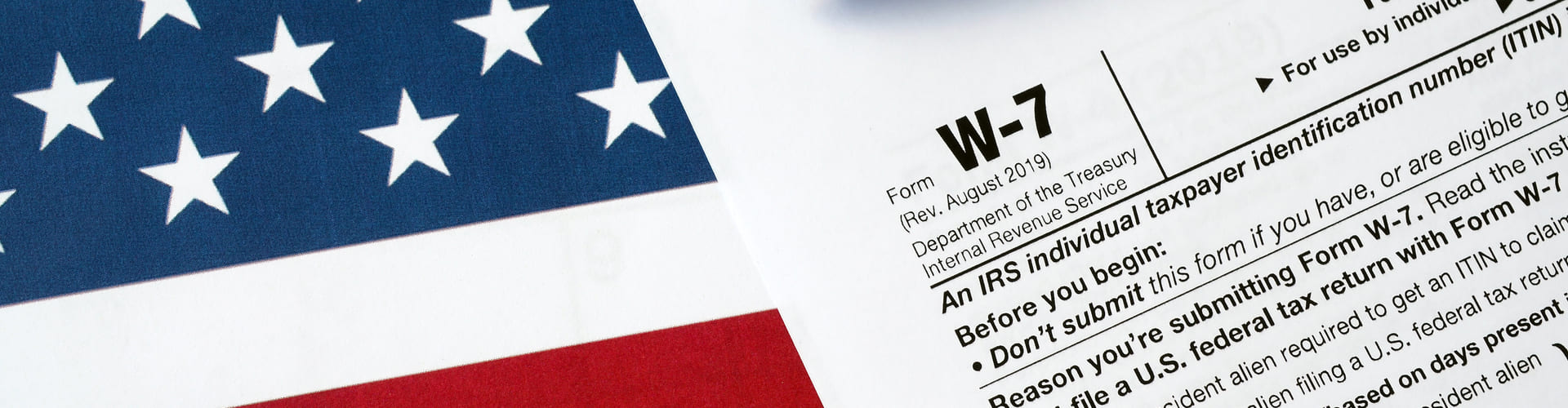
An ITIN is an Individual Taxpayer Identification Number, a special 9-digit tax ID issued by the U.S. Internal Revenue Service (IRS). It looks like a Social Security number (SSN) because it’s formatted the same (XXX-XX-XXXX) and always starts with a “9.” However, an ITIN is only for federal tax purposes – it’s used to file U.S. tax returns and report income if you don’t qualify for an SSN. The IRS created ITINs to help people comply with tax laws even if they aren’t eligible for an SSN (for example, non-U.S. citizens who have to pay U.S. taxes).
ITINs are generally for non-U.S. citizens and others who cannot get an SSN but still need a taxpayer ID number. This includes several groups, like foreign nationals with U.S. income, undocumented immigrants, and dependent family members who are listed on a U.S. tax return. If you’re not a U.S. citizen or don’t have a Social Security number but need to file a U.S. tax return, you likely need an ITIN. On the other hand, if you can get an SSN (e.g. U.S. citizens, green card holders, or anyone with work authorization), you should not apply for an ITIN.
In this guide, you’ll learn exactly what an ITIN is, who needs one (and who doesn’t), what you can and can’t do with an ITIN, and how to get one. We’ll also clear up common misconceptions about ITINs (like whether you can work or get benefits with one) and answer frequently asked questions. Let’s get started.
ITIN stands for Individual Taxpayer Identification Number. It’s a tax processing number issued by the IRS to individuals who need a U.S. taxpayer ID for federal tax filing, but who are not eligible for a Social Security number. In plain language, an ITIN is basically a substitute tax ID for people who can’t get an SSN.
Every ITIN is a unique nine-digit number that begins with “9” (for example: 9XX-XX-XXXX). You’ll find this number on any IRS documents or letters assigning the ITIN, and you’ll use it on your U.S. tax returns instead of an SSN. The ITIN format and length are the same as an SSN, which helps the IRS process tax returns consistently.
Important: An ITIN is only used for taxes. Unlike an SSN, it’s not a general identification number. The IRS won’t share your ITIN information with others except in rare law enforcement scenarios, and the ITIN card/letter isn’t a form of ID beyond the tax system.
Why do ITINs even exist? The IRS issues ITINs to ensure that everyone who has a U.S. tax obligation can file their taxes, even if they aren’t eligible for an SSN. All income earners – regardless of immigration status – are required to pay federal taxes in the U.S. This includes people who may not be authorized to work in the U.S. or who live abroad but earn U.S. income. Without an ITIN, these individuals would have no way to file a return or report their income, which would create a loophole in the tax system.
In short, the ITIN is the IRS’s solution for tax identification of:
By issuing ITINs, the IRS brings these taxpayers into the system so they can file returns, pay any tax due, or claim refunds legally. It also allows the IRS to process and account for those returns efficiently. Remember, having an ITIN does not depend on immigration status – you can receive an ITIN whether you’re documented or undocumented, so long as you need it for a legitimate tax filing purpose.
An ITIN is formatted just like an SSN: three digits, a dash, two digits, a dash, then four digits (example: 912-34-5678). The key differences are that ITINs always start with “9” and, in the middle, they have certain digit ranges that SSNs don’t use (70-88, 90-99, etc., in the fourth and fifth digits). These patterns help distinguish ITINs from SSNs.
When you apply for an ITIN, the IRS will send you a confirmation letter with your new ITIN. That letter is the official documentation of your ITIN. You’ll also see your ITIN listed on any U.S. tax returns you file (usually on the top of Form 1040 in the space for the taxpayer’s SSN/ITIN). If a spouse or dependent has an ITIN, it will appear on the tax return next to their name. Keep any IRS notice or letter with your ITIN in a safe place, as it’s your proof of the number.
Not everyone needs an ITIN. In fact, most people don’t need one – U.S. citizens and anyone who can get an SSN should use those as their taxpayer ID. ITINs are specifically for people who aren’t eligible for an SSN but have a U.S. tax filing or reporting obligation. Let’s break down a few common scenarios where you would need an ITIN:
If you’re a nonresident alien (non-U.S. citizen living abroad) or other foreign national who has earned income from U.S. sources, you likely need to file a U.S. tax return – and without an SSN, you’d need an ITIN to do so. For example:
In all these cases, you have a U.S. tax requirement but no Social Security number, so the ITIN is your key to filing. Note that simply having income taxed in the U.S. isn’t enough – the IRS specifically requires an ITIN if you must file a return or be listed on one.
Another group that often needs ITINs are family members (spouses or dependents) who are included on a U.S. tax return but who don’t have SSNs. Common scenarios:
Keep in mind that dependents and spouses only qualify for ITINs in certain situations. As of 2018, a dependent or spouse can get an ITIN if they are listed on a tax return for a legitimate purpose (like to claim an allowable tax benefit or because a joint return is being filed). The IRS won’t issue ITINs just to have one; there must be a tax reason (we’ll cover those exceptions later). But if you do need to include a non-SSN-holding spouse or child on your taxes, the ITIN is the solution.
Students and scholars in the U.S. on visas (such as F-1, J-1, or M-1 visas) often wonder about ITINs. Here’s how it works:
Note: Some international students do qualify for SSNs (for instance, if you’re working on-campus or on OPT with proper authorization). In those cases, you wouldn’t use an ITIN. But for those who cannot get an SSN, the ITIN ensures you fulfill your U.S. tax obligations. The rules can depend on your specific visa and situation, so when in doubt it’s wise to consult a tax professional or your school’s international office. The key point is: visa holders without SSNs who have to file a return will need an ITIN as their tax ID.
We’ve covered who needs an ITIN. Equally important is understanding who should NOT get an ITIN. Getting an ITIN when you aren’t supposed to (or don’t need one) can cause confusion and delays with the IRS. Here are the cases where an ITIN is not needed:
If you’re a U.S. citizen, whether by birth or naturalization, you will have or be eligible for a Social Security number. U.S. citizens do not use ITINs – your taxpayer ID is your SSN, which you use on all tax documents. The same goes for lawful permanent residents (green card holders) and anyone who has obtained the legal right to work in the U.S. If you fall into these categories, you should apply for an SSN (usually done via the Social Security Administration) and use that for tax filing, rather than an ITIN.
In short, ITINs are a last resort for people who can’t get SSNs. If you can get a Social Security number because of your citizenship or immigration status, the IRS expects you to use the SSN instead. For example, if you recently received a green card, you’ll get an SSN (or you may already have one from when you got a work permit). You wouldn’t renew or keep using an ITIN in that case.
This might sound redundant with the above, but it’s worth emphasizing: Anyone eligible for a Social Security Number should not apply for an ITIN. Sometimes non-U.S. citizens qualify for an SSN due to work authorization. Examples include someone on an H-1B work visa, or a student on OPT, or the spouse of a U.S. citizen who received a work permit while waiting for a green card. These individuals can go to the Social Security office and get an SSN.
If you’re in this situation – even if you haven’t gotten your SSN yet – do not apply for an ITIN. The IRS will generally deny an ITIN application if they suspect you actually qualify for an SSN. In fact, by law you cannot have both an ITIN and an SSN at the same time. So if you’ve filed for an SSN (or plan to), that means you won’t need the ITIN. The correct approach is to wait for the SSN and use that for your taxes.
(One exception: If you applied for an SSN but the Social Security Administration ultimately denies your application, then you could apply for an ITIN. But you must wait for the SSA’s determination. Many ITIN rejections happen because the IRS discovered the person could have obtained an SSN instead.)
Not everyone with foreign status needs an ITIN. You only need an ITIN if you have a requirement to put a taxpayer ID on a U.S. tax document (such as a tax return, tax form, or treaty benefit form). If you don’t have any U.S. filing or reporting requirement, you generally don’t need an ITIN.
For example, say you’re a foreign resident with some U.S. bank interest income. If that income is below the filing threshold and you’re not otherwise required to file a U.S. return, you wouldn’t need an ITIN. Or perhaps you’re a dependent who isn’t being claimed on any return and you have no income – you wouldn’t need a taxpayer ID at all in that case.
Another case is nonresident aliens just receiving passive income with proper withholding. If tax is withheld at source and you’re not going to file a return to claim a refund or benefit, you might not need an ITIN. However, many people in this situation still obtain one to file a return and potentially reclaim some of the withheld tax (especially if a tax treaty allows a lower tax rate).
The main point here is: Don’t get an ITIN “just in case.” It’s not a general ID you need to have. It’s specifically tied to tax filing. If you aren’t required to file and don’t plan to file any U.S. tax forms, you can hold off on getting an ITIN until a need arises. And remember, having an ITIN by itself doesn’t incur any obligations – it’s only when you have income or something to report that you must use it.
(Note: One scenario to be careful about: sometimes banks or others might ask for a TIN (Tax ID Number) for forms like W-8BEN if you’re a foreigner. If you have no U.S. TIN, some might say to get an ITIN. But IRS rules require a tax reason for an ITIN. If all you’re doing is, say, providing a W-8BEN for bank interest that’s not taxable, you actually don’t need an ITIN. When in doubt, get professional advice rather than applying for an ITIN that you might not need.)
It’s critical to understand the limitations of an ITIN. Many people have misconceptions that an ITIN is some kind of equivalent to a Social Security number. In reality, ITINs are very limited in purpose. Let’s clarify what having an ITIN allows you to do, and what it doesn’t allow:
In summary, ITINs let you fulfill your U.S. tax obligations and certain financial tasks. They are a tool for tax compliance. Using an ITIN can help establish a history of tax filing, which could be beneficial if you ever seek legal immigration status in the future (showing you followed tax laws can be a positive factor, demonstrating “good moral character” in some immigration cases). And as mentioned, ITIN holders do contribute billions in taxes, including state and local taxes each year, thereby contributing to public funds just like other taxpayers.
Now the flipside: What doesn’t an ITIN do? It’s crucial to dispel any false hopes or fears. An ITIN does NOT:
To summarize, an ITIN’s purpose is narrow: it lets you pay taxes and fulfill tax obligations. It won’t give you permission to work, it won’t put you into the Social Security system, and it won’t change your immigration status. Anyone or any service suggesting that an ITIN is a way to “legalize” your status or do things like work legally is misinforming you. On the flip side, having an ITIN should not be seen as dangerous – the IRS keeps ITIN information private and does not use it to enforce immigration law. It’s purely so you can comply with tax law.
Tip: Use your ITIN only for its intended purposes (tax filing, banking if needed, etc.). Don’t put it on job applications or forms that ask for an SSN outside the tax context, as that could cause legal issues or identity mix-ups. And if you ever do get a Social Security number, the ITIN goes away – you switch entirely to using the SSN (more on that in the FAQs).
It’s easy to get confused by the alphabet soup of identification numbers. Let’s compare the ITIN to other common IDs:
A Social Security Number (SSN) is the standard identification number for U.S. citizens and authorized residents. It’s issued by the Social Security Administration (SSA) primarily for tracking earnings and benefits eligibility. Only individuals with permission to work in the U.S. (or U.S. citizens) can get an SSN. By contrast, an ITIN is issued by the IRS (not SSA) and is not for work – it’s solely a tax ID for those who can’t get an SSN. Both numbers are nine digits, but having an ITIN is not the same as having an SSN.
Here are the key differences:
In essence, think of the SSN as the “gold standard” ID – if you can get one, that’s your ID for everything including taxes. The ITIN is a fallback – a strictly tax-only ID for those who fall outside the SSN system. They both help the IRS identify taxpayers, but only the SSN opens doors to work and benefits.
Don’t confuse ITIN with EIN. EIN stands for Employer Identification Number, and it’s basically the SSN equivalent for business entities and employers. An EIN is a federal tax ID issued by the IRS to identify a business for tax purposes. For example, corporations, partnerships, trusts, and LLCs often have EINs. If you run a business with employees, you’ll use an EIN to file payroll taxes. If you have a trust or estate that must file a return, it needs an EIN.
An EIN is not used for personal tax filing. If you see someone using an EIN on a personal tax return in place of an SSN, that’s incorrect (and the IRS will flag it). Conversely, an ITIN is never used to identify a business. Even a one-person business (sole proprietorship) typically just uses the owner’s SSN or ITIN. Only separate legal entities get EINs.
One person can have both an ITIN (for their individual taxes) and, say, an EIN for their business, and that’s perfectly fine. But the EIN identifies the business entity, whereas the ITIN identifies you individually. Also, getting an EIN is a simpler process usually (you can often get one online instantly if you have a responsible party with an SSN or ITIN). Getting an ITIN requires the W-7 application with documentation.
To put it succinctly: An EIN is for a company or employer; an ITIN is for an individual taxpayer. For instance, a foreign entrepreneur starting a U.S. LLC might need both: an EIN for the LLC, and an ITIN for themselves personally to report the LLC’s income on a tax return. Meanwhile, a large corporation only needs an EIN, and an individual person with no business only needs an SSN or ITIN.
As mentioned, TIN (Taxpayer Identification Number) is an umbrella term. Under that umbrella, the IRS recognizes several types of TINs:
The ITIN is just one of these TIN types. It’s specifically the one for individuals without SSNs. On forms and instructions, when you see “Enter your SSN/ITIN,” it means enter whichever one you have – SSN if you have it, otherwise ITIN. The IRS systems treat an ITIN in many ways like an SSN for tax processing, but internally they know it’s an ITIN range.
So, ITINs are an important part of the tax system, but they’re a replacement ID for a niche set of taxpayers. The vast majority of U.S. taxpayers use SSNs. ITIN filers are a smaller group, but significant (the IRS had issued over 25 million ITINs since the program started in 1996). They keep the tax system inclusive so that everyone who owes taxes can pay in and file correctly.
If you’ve determined you need an ITIN, how do you actually get one? Here’s a brief overview (we have a detailed step-by-step guide on this site – see the internal link below – but we’ll summarize the basics here):
That’s the overview! It might seem like a lot, but basically it boils down to: fill out W-7, prove your identity, and send it to IRS (usually with your tax return).
Pro Tip: Because applying for an ITIN requires handling sensitive documents and navigating IRS rules, many people choose to get help. For instance, Easy Tax Store is an IRS Certifying Acceptance Agent (CAA) authorized to assist with ITIN applications. We can verify your passport and documents in our office and help complete the forms correctly, so you don’t have to mail your originals to the IRS. This takes a lot of stress out of the process. If you’d like professional help to apply for an ITIN, check out our ITIN application guide or get in touch with us – we offer a convenient ITIN application service.
Finally, let’s address some common questions and misconceptions about ITINs in a quick FAQ format:
Q: What is an ITIN number used for?
A: An ITIN is used for federal tax reporting and filing. Its main use is to let you file your U.S. income tax return if you don’t have an SSN. You put the ITIN on your 1040 form to identify yourself to the IRS. Beyond taxes, an ITIN can sometimes be used to open bank accounts or apply for loans (some banks accept it as an ID number), but this is not guaranteed. Think of the ITIN as your tax ID number for dealing with the IRS. It ensures you can pay any tax you owe, file returns, and claim refunds or credits you’re entitled to. Other than that, it doesn’t have broad uses – it’s not for things like a driver’s license or official ID. In short: ITIN = tax number (plus limited financial uses like banking if the institution allows).
Q: Do I need an ITIN to file taxes in the U.S.?
A: If you are required to file a U.S. tax return and you do not have an SSN, then yes, you need an ITIN (or you need to obtain an SSN if eligible). You cannot file a valid tax return without a taxpayer identification number. So, for nonresident aliens, foreign students, dependents, etc., the ITIN is the solution to get your return filed. However, if you are eligible for an SSN (for example, a work-authorized individual), you should use the SSN instead and you wouldn’t need an ITIN. To put it simply: Everyone filing a tax return needs a number – either SSN or ITIN or (for businesses) an EIN. If your situation prevents you from having an SSN, the ITIN is your route. One nuance: if you’re filing a joint return and your spouse needs an ITIN, you can file with “Applied For” and attach the W-7 to get the ITIN issued. The bottom line is, you can’t fulfill the tax filing requirement without one of these numbers. The IRS even provides an Interactive Tax Assistant tool to help determine if you should apply for an ITIN. But generally, no SSN + need to file = apply for ITIN.
Q: Can I work with an ITIN instead of a Social Security Number?
A: No, an ITIN does not authorize you to work in the U.S. Having an ITIN is not a substitute for a work permit or an SSN when it comes to employment. Employers are required to verify your authorization to work (through documents like a work visa or green card and an SSN for payroll). An ITIN does not meet those requirements. It’s purely for taxes. In fact, when you start a job, your employer cannot use an ITIN on the Form I-9 or W-2 for employment purposes – they need an SSN for those who are allowed to work. If you’re getting paid under the table and only have an ITIN, you’re not legally working – you’re just using the ITIN to pay taxes on that income (which you should, to stay compliant with tax law). But it doesn’t make the work legal. To be very clear: you must have separate USCIS/DHS authorization to work (and then an SSN) – an ITIN alone confers no work rights.
Q: Does an ITIN give me legal status or help with immigration?
A: No, an ITIN has no effect on your immigration status. It doesn’t grant a visa, it doesn’t give you a green card, and it doesn’t make you “legal” in the U.S. if you are not already. The ITIN is issued by the IRS regardless of immigration status – the IRS doesn’t care if you’re undocumented or on a tourist visa or any other status; they just want you to pay taxes if you owe them. Conversely, immigration authorities (like USCIS or ICE) don’t give you any benefit just because you pay taxes via an ITIN. There is a myth out there that paying taxes can put you on a path to citizenship – this is misleading. While filing taxes can show good behavior (for example, if an immigration reform or court case considers whether you’ve been a person of good moral character, having paid taxes might help), it in itself does not grant legal status. Many undocumented immigrants use ITINs to file taxes every year and remain undocumented. There is no automatic mechanism that converts an ITIN into any immigration document. Also, the IRS generally keeps ITIN info private from immigration enforcement, so using an ITIN won’t alert ICE to your presence in the country (barring criminal investigations). So you should feel safe to file taxes, but just know it’s not an immigration solution. Only agencies like USCIS can grant legal status (through visas, DACA, asylum, green cards, etc.), and that process is separate from taxes.
Q: Can I open a bank account with an ITIN?
A: Often, yes, you can. Many U.S. banks and credit unions will allow someone with an ITIN to open accounts, especially if you don’t have an SSN. In practice, when banks ask for a Social Security number on applications, they will accept an ITIN in that field for non-citizen customers. For example, large banks like Wells Fargo, Bank of America, Chase, etc., have programs or policies to accommodate ITIN holders for basic checking or savings accounts. Additionally, some lenders accept ITINs to grant credit – there are even ITIN mortgage loans available and credit cards for people with ITINs. The NILC (National Immigration Law Center) notes that ITINs may be accepted for opening interest-bearing bank accounts or obtaining a mortgage. Keep in mind, you’ll still need to provide other identification (like a passport or foreign ID) to satisfy bank requirements for identity verification (due to federal banking laws). But the lack of an SSN alone shouldn’t bar you from banking. If one bank turns you down, shop around – many institutions are familiar with ITIN customers. Also, some states issue driver’s licenses or ID cards to residents regardless of immigration status; those, combined with ITIN, can help in proving identity to banks. Overall, an ITIN is widely recognized in the financial system as an alternative ID number. Just remember it doesn’t establish U.S. credit history by itself (that comes from using credit accounts). But yes, if you only have an ITIN, you can still manage your finances with U.S. banks in most cases.
Q: Can I change my ITIN to an SSN later?
A: There’s no formal “conversion” process, but if you become eligible for an SSN in the future, you should apply for the SSN and then stop using your ITIN. Once you have a Social Security number, you’ll use that for all purposes going forward. By law, you cannot have both an ITIN and SSN at the same time. In fact, when you get an SSN, the IRS expects you to let them know so they can combine your tax records. Typically, you’d write a letter to the IRS (to the ITIN Operations department) saying “Hey, I got my SSN, it’s XYZ, and here was my ITIN, please merge my records.” This ensures any prior tax history under your ITIN is linked to your new SSN. After that, your ITIN is essentially retired. If the ITIN was still valid, the IRS will deactivate it. If it was already expired, it just stays expired. Going forward, use the SSN on all tax returns. Do not continue to file using the ITIN once you have an SSN. This also means you should inform any banks or institutions where you used the ITIN to update your records with the SSN (since SSN is a more universally recognized ID). In summary: you don’t convert the number, you replace it. And the IRS and Social Security Administration take care of their parts separately – SSA issues the SSN, IRS links it to your past ITIN filings internally. It’s a happy day when you get to make this switch because it usually means you obtained legal work status or citizenship! Just be sure to tie up the loose ends by updating records. (Pro tip: When you send that IRS letter, include copies of your ITIN letter and the new SSN card for reference. And wait a few months before filing a new tax return under the SSN to ensure their system updates.)
Q: What happens if I don’t use my ITIN for several years?
A: An ITIN can expire due to inactivity. Under current law, if an ITIN isn’t used on any federal tax return for three consecutive tax years, it will expire on December 31 of the third year of non-use. For example, say you got an ITIN and used it on a 2022 tax return, but then you didn’t file returns for 2023, 2024, or 2025 (perhaps you left the U.S. or had no income). As of December 31, 2025, that ITIN would expire. If you needed to file again in 2026, you’d have to renew the ITIN first. Renewal means submitting a new W-7 (checking the “Renewal” box) with documentation, but you don’t need to attach a return in the case of renewal. The IRS started these expiration rules to purge unused ITINs from the system after the PATH Act of 2015. Additionally, a bunch of ITINs with certain middle digits have been expiring in waves (for instance, ITINs with middle digits 70-88 expired a few years ago unless renewed). So if you got your ITIN years ago, it may have expired already unless you renewed it or kept using it. If you file a tax return with an expired ITIN, the return will be processed, but any exemptions/credits will be disallowed until you renew, and refunds could be delayed. The IRS usually sends a notice (CP-48) to inform you that your ITIN is expiring at year-end if you had used it in the past. To avoid any disruption, renew it before filing your next return if it expired. In practice, renewing is simpler than the first application (no need for a tax return attached). And remember, if you continuously use the ITIN each year, it will keep rolling active – each tax filing extends it for another three years from that filing year. So consistent filing means you rarely have to worry about expiry. If you’re not using it because you left the U.S. or something, that’s fine – just know you’ll need to reactivate (renew) if you ever come back to the U.S. tax system. (One more tip: if you do get an SSN after having an ITIN, you don’t worry about ITIN expiration – you just switch to the SSN as discussed above.)
Easy Tax Store is here to help. We’re experienced in U.S. tax matters for internationals and are an IRS-approved Certifying Acceptance Agent for ITIN applications. Whether you need to apply for a new ITIN, renew an expiring ITIN, or file a U.S. tax return with an ITIN, our team can guide you through the process step by step.
We also offer a Free Tax Estimate service – send us your details and we’ll estimate your U.S. tax refund or liability at no cost, so you know what to expect. Don’t hesitate to reach out via our contact page or by phone/email.
Tax compliance is important, and with the right help it doesn't have to be complicated, even if you're not a U.S. citizen. Browse our U.S. tax guides and articles to learn more about filing taxes as a foreigner. Thank you for reading, and happy filing!